Why the lines matter
Those fine ridges on a printed object tell the story of how it was made. We think they deserve a closer look.
3 min read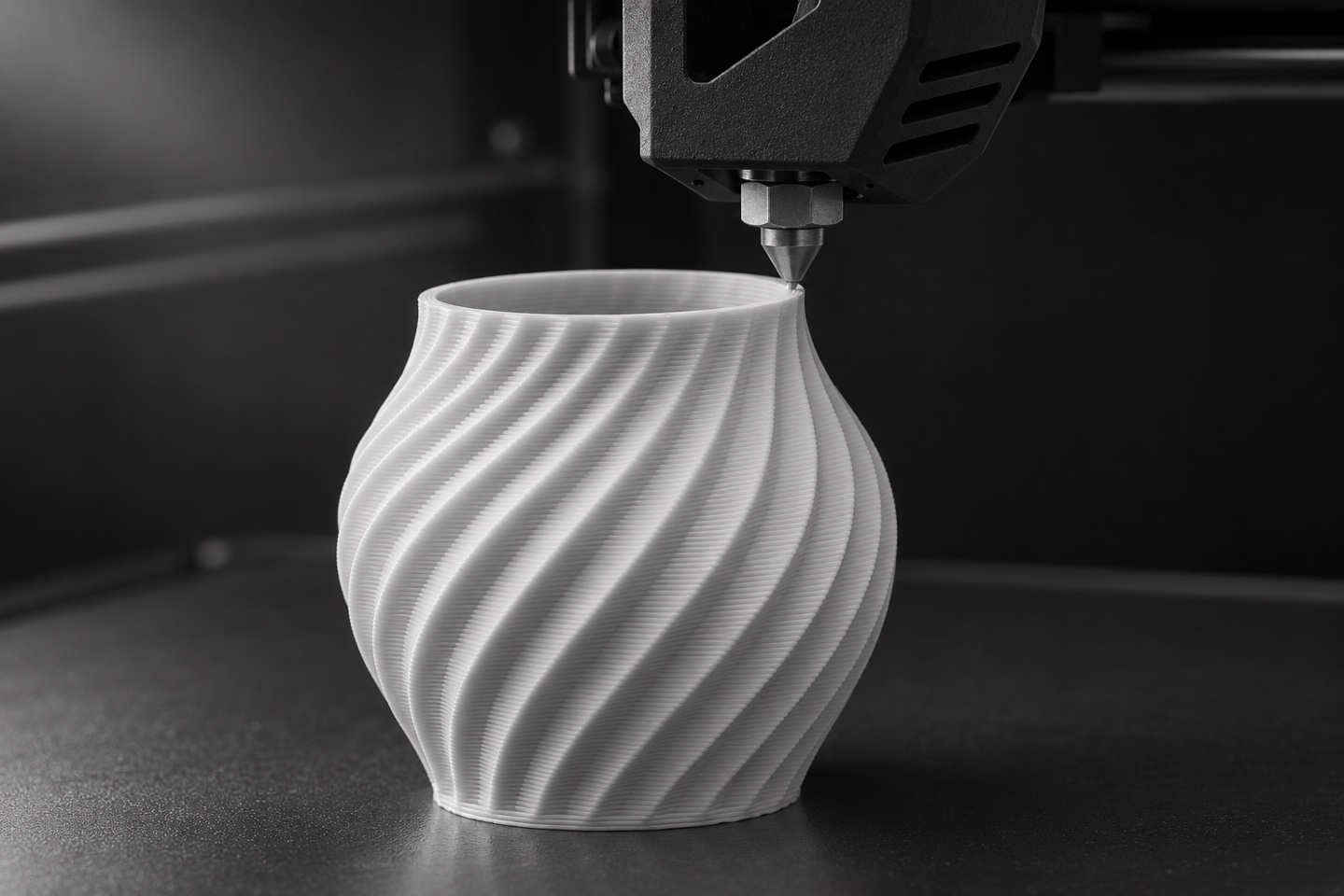
Made one layer at a time
A 3D print starts as a shape on a screen. The printer follows that shape in thin layers, building the object from the base up. You can often see that journey on the finished surface: a series of fine lines that catch the light as you turn the piece.
On some objects, the lines are quiet. On others, they become part of the design. Curves, flutes and repeated forms can make the layers feel intentional rather than incidental.
Texture is a choice
The right finish depends on where the piece will live. A desk organizer might look best with a crisp, practical surface. A decorative object can make more of its texture, especially when light moves across it during the day.
Colour changes the effect too. Pale colours show soft shadows between layers; darker colours tend to read as a stronger silhouette. We like to think about the shape, colour and surface together.
Look a little closer
If you are choosing a print online, zoom in on the photographs. Look at the edges, the curves and the places your hands will touch. The small details tell you more than a distant product shot ever could.
The best printed objects do not need to hide how they were made. That is part of their character.